
Why Do Ants Suddenly Invade Your Home?
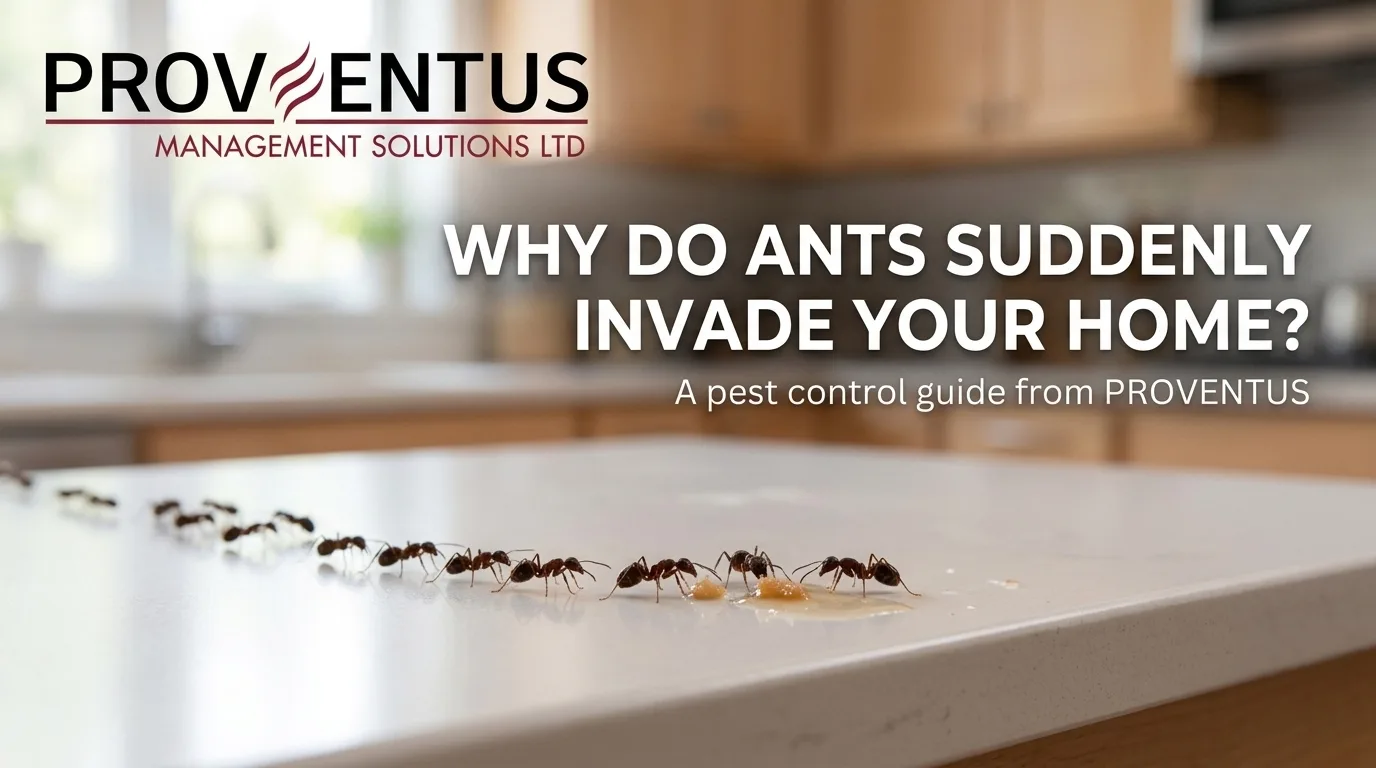
Why Do Ants Suddenly Appear in the House?
Why do ants suddenly appear in the house? Food crumbs, moisture, weather changes, hidden nests, and tiny entry points can quickly turn a few sightings into an infestation. Understanding these triggers helps homeowners identify the source early, reduce attractants, and choose appropriate ant infestation treatment for homes before colonies spread into kitchens, walls, bathrooms, and other living areas.
Ant infestations often begin when ants find reliable food, water, shelter, or a pathway indoors. Recognizing these triggers can help homeowners respond early with local pest control for ants and practical prevention.
What Causes Sudden Ant Infestations?
Several environmental and household conditions can attract ants unexpectedly:
- Food availability: Sugar, sweets, crumbs, pet food, and food residue attract foraging ants.
- Moisture: Leaking pipes, damp corners, bathrooms, and stagnant water provide essential moisture.
- Weather changes: Heavy rain, heat, or sudden temperature changes can disturb outdoor colonies.
- Hidden nests: Colonies may establish themselves inside wall voids, beneath floors, or near foundations.
- Tiny entry points: Cracks around windows, doors, pipes, and electrical openings can provide easy access.
- Poor sanitation: Unclean surfaces and uncovered food can create persistent feeding opportunities.
- Vegetation near buildings: Plants touching walls or windows may provide routes into the house.
Why Do Ants Suddenly Appear in the House?
Ants generally enter homes because they are searching for resources or responding to changes around their colony. A sudden increase in sightings may indicate that scout ants have discovered a dependable source of food or moisture.
Common triggers include:
- Food residue left on counters or floors.
- Unsealed sugar, biscuits, cereals, or other food.
- Water leakage beneath sinks.
- Damp wooden areas or wall spaces.
- Cracks around doors and windows.
- Outdoor colonies disturbed by rain.
- Nearby construction or landscaping activity.
- Seasonal changes that alter nesting conditions.
This explains why an apparently clean home can still experience a sudden ant problem.
Ant Infestation Causes: A Featured-Snippet Guide
| Cause | Why Ants Are Attracted | Common Location |
| Food crumbs | Provides an easy energy source | Kitchen |
| Sugar residue | Highly attractive to many ants | Counters |
| Water leaks | Supplies moisture | Bathroom, sink |
| Damp areas | Supports nesting conditions | Walls, floors |
| Weather changes | Disturbs outdoor colonies | Doors, windows |
| Structural gaps | Creates indoor entry routes | Walls, windows |
| Hidden nests | Produces continuing activity | Wall voids |
| Pet food | Provides accessible food | Utility areas |
How Do Ants Find Their Way Inside?
Ants can use remarkably small openings to enter a building. Once a scout discovers food or water, it can establish a trail that allows other workers to follow the same route.
Potential entry points include:
- Window and door gaps
- Cracks in walls
- Plumbing openings
- Floor gaps
- Foundation cracks
- Damaged seals
- Utility openings
- Gaps around air-conditioning installations
Sealing these routes can support long-term pest control for sudden ant infestation, but simply blocking visible openings may not eliminate an established colony.
What Attracts Ants to Kitchens?
The kitchen is often the first place homeowners notice ants because it provides several resources simultaneously.
Common attractants
- Sugar and syrup
- Fruit residue
- Food crumbs
- Grease and cooking residue
- Open food containers
- Unwashed dishes
- Pet-food bowls
- Garbage and food waste
Regular cleaning, sealed containers, and prompt removal of spills can reduce these attractants.
Can Rain Cause a Sudden Ant Infestation?
Yes. Changes in outdoor conditions can alter ant activity. Heavy rain may flood or disturb underground nests, encouraging ants to search for alternative shelter. During hot or dry periods, ants may also seek moisture inside buildings.
Therefore, a sudden appearance after rainfall does not necessarily mean the infestation started that day. The colony may have been nearby for some time.
How Can You Spot an Ant Infestation Early?
Early warning signs can help homeowners respond before the problem becomes extensive.
Look for:
- Repeated ant trails.
- Ants appearing from the same crack.
- Increased activity around sinks or food areas.
- Small piles of soil or nesting material.
- Ants repeatedly appearing near windows.
- Activity inside cupboards.
- Winged ants around particular areas.
- Ants emerging from wall or floor gaps.
A few isolated ants may be occasional visitors, while repeated trails and increasing numbers may indicate a more established problem.
Why Are Ant Trails Important?
Ant trails provide useful clues about where ants are travelling. Foraging ants may leave chemical trails that help other colony members follow a successful route to food or water.
Instead of focusing only on visible ants, homeowners should investigate:
- Where ants are entering.
- Where they are travelling.
- What resource they are seeking.
- Whether activity leads toward a hidden nesting area.
This approach is more useful than simply removing individual ants.
When Is Ant Infestation Treatment for Homes Necessary?
Professional treatment may be appropriate when ant activity is persistent, widespread, or repeatedly returns after cleaning.
Consider professional help when:
- Ants appear every day.
- Multiple rooms are affected.
- Ant trails keep returning.
- Ants emerge from walls or flooring.
- DIY methods provide only temporary relief.
- The nest cannot be located.
- Children or pets make repeated chemical use undesirable.
- The infestation appears to be increasing.
A professional inspection can help determine the species, likely nesting area, entry routes, and appropriate treatment strategy.
Choosing Local Pest Control for Ants
When searching for local pest control for ants, homeowners should evaluate more than price alone. A suitable provider should use a structured inspection-and-treatment approach.
Consider these factors:
- Experience with household ant infestations.
- Proper inspection before treatment.
- Identification of likely entry and nesting areas.
- Clear explanation of the treatment process.
- Appropriate safety precautions.
- Follow-up recommendations.
- Transparent service information.
- Preventive advice for future infestations.
For Kolkata homeowners, choosing an experienced Pest Control Company in Kolkata can make it easier to address recurring ant activity systematically.
How Does Professional Ant Treatment Work?
A professional ant infestation treatment for homes may involve several stages rather than simply spraying visible ants.
Typical process
1. Inspection
The technician identifies activity, trails, moisture sources, food attractants, and possible entry points.
2. Identification
Determining the type of ant can help guide the appropriate control strategy.
3. Source assessment
Professionals investigate whether the colony may be indoors or outdoors.
4. Targeted treatment
Treatment is selected according to the infestation and site conditions.
5. Entry-point management
Cracks and openings may be identified for sealing or repair.
6. Follow-up monitoring
Continuing activity can indicate that additional intervention is required.
The exact treatment should always depend on the property, infestation level, ant species, and product-label requirements.
How Can You Prevent Ants From Returning?
Prevention is an important part of long-term pest management.
Home prevention checklist
- Store food in airtight containers.
- Clean crumbs and spills promptly.
- Keep kitchen surfaces dry.
- Repair plumbing leaks.
- Empty food waste regularly.
- Clean under appliances.
- Keep pet food areas clean.
- Trim vegetation touching the building.
- Seal suitable cracks and gaps.
- Monitor recurring ant trails.
- Address moisture problems quickly.
These measures can reduce conditions that make a property attractive to ants.
Why Choose Proventous Management Solution Ltd?
For homeowners looking for structured pest-management assistance, Proventous Management Solution Ltd, led by Swapan Chatterjee, can be positioned around professional inspection, practical pest-management planning, and customer-focused service.
For content and service communication, the key principle should be clear: successful ant management is not simply about killing visible ants. Identifying attractants, entry routes, nesting conditions, and recurrence patterns is essential to developing a more complete solution.
When Should You Schedule Ant Infestation Treatment?
If ants continue appearing despite cleaning and basic prevention, it may be time to schedule ant infestation treatment.
A professional assessment becomes particularly useful when:
- The infestation is recurring.
- Ants are appearing in several rooms.
- Activity is concentrated around walls or floors.
- The source cannot be identified.
- Household prevention has not worked.
- The number of ants is increasing.
Early attention may help prevent a manageable problem from becoming a persistent household nuisance.
Ant Infestation Treatment: What Homeowners Should Avoid
Some common responses may provide only temporary results.
Avoid relying exclusively on:
- Repeatedly killing visible ants.
- Leaving food uncovered.
- Ignoring moisture leaks.
- Blocking only one visible entry point.
- Using pesticides without reading product directions.
- Mixing different chemical products.
- Assuming every ant infestation has the same cause.
Professional guidance is particularly valuable when the infestation is persistent or the nest is inaccessible.
Conclusion
Sudden ant infestations usually have identifiable triggers, including food, moisture, weather changes, hidden nests, and accessible entry points. Early identification can prevent recurring activity from becoming a larger household nuisance. By combining sanitation, moisture control, entry-point management, monitoring, and professional support from an experienced provider such as Proventous Management Solution Ltd, homeowners can approach ant control systematically and responsibly.
Frequently Asked Questions About Sudden Ant Infestations
Why do ants suddenly appear in the house?
Ants may suddenly appear when they discover food, moisture, or shelter indoors. Weather changes can also disturb outdoor colonies and encourage ants to enter buildings.
What attracts ants inside a home?
Food residue, sugar, crumbs, pet food, water leaks, damp areas, and accessible entry points can attract ants.
Can clean homes still have ants?
Yes. Even well-maintained homes can experience ant activity if ants find moisture, small entry points, or an accessible outdoor colony nearby.
Does rain increase ant activity?
Rain can disturb some outdoor nests and encourage ants to search for alternative shelter or drier conditions.
How do I stop ants from coming back?
Reduce food and moisture sources, maintain cleanliness, seal suitable entry points, monitor trails, and seek professional assistance when activity persists.
When should I contact a pest control company?
Contact a professional when ant activity is persistent, widespread, repeatedly returns, or appears to originate from inaccessible nesting areas.
Is professional ant treatment better than DIY treatment?
The appropriate option depends on the infestation. Professional inspection can be useful when the colony, entry route, or cause cannot be identified through basic household measures.
How can I schedule ant infestation treatment?
Homeowners can schedule ant infestation treatment with a qualified pest-management provider after discussing the infestation, property conditions, and inspection requirements.
Recent Posts
What Attracts Pests to Offices and How...
Can You Spot Hidden Termite Damage Before...

Why Are Spiders More Active in Late...