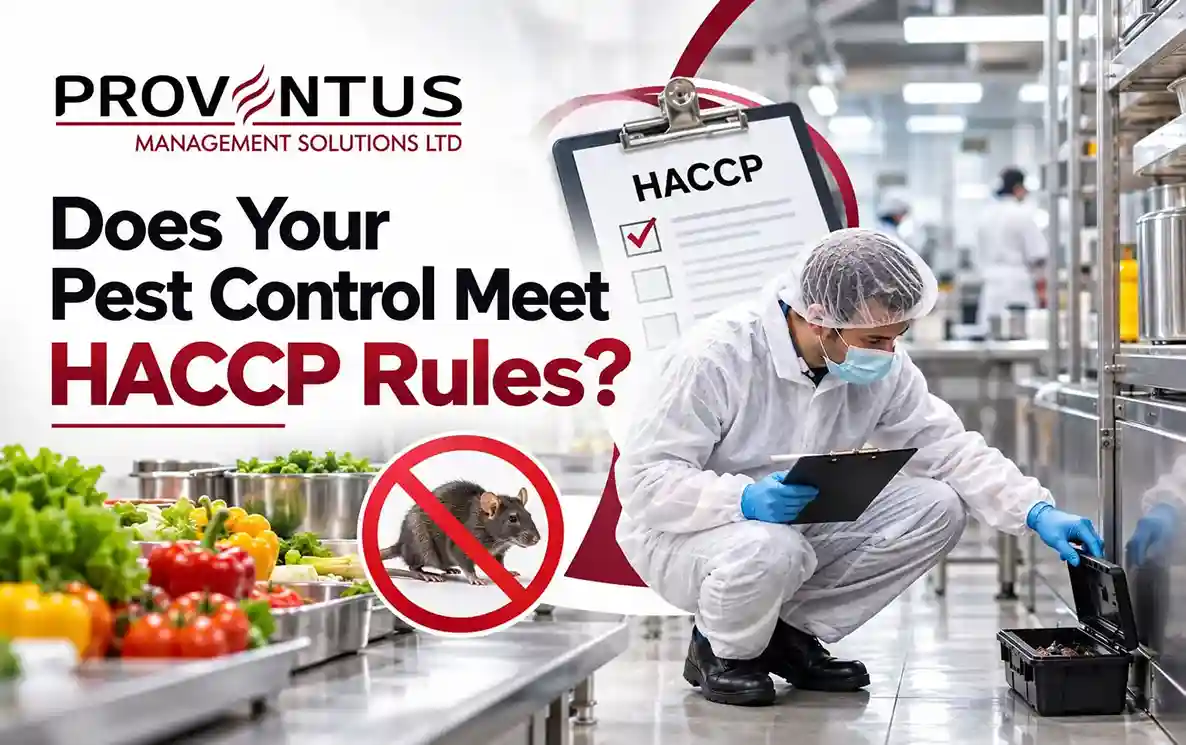
Does Your Pest Control Meet HACCP Rules?
How Does Commercial Pest Control Ensure HACCP Compliance?
HACCP compliance requires businesses to identify and control food safety hazards, including pest-related risks. The Best Commercial Pest Control Company in Kolkata can help food businesses strengthen pest prevention, maintain inspection records, and prepare for audits. Proventous Management Solutions Ltd, led by Swapan Chatterjee, supports commercial pest management with a focus on hygiene, monitoring, documentation, and practical prevention strategies for food-related facilities. Commercial pest control is essential for office space and others due to pests can be harmful for human beings and pets and others. It is very unhygienic because from pest viruses, bacteria has been spread out.
Commercial pest control plays an important role in protecting food safety, maintaining hygiene, and reducing contamination risks. For food manufacturers, restaurants, warehouses, and commercial kitchens, a documented pest management programme can support HACCP-based food safety procedures. Choosing the Best Commercial Pest Control Company in Kolkata can help businesses develop suitable monitoring routines, identify pest activity early, and maintain records for inspections and audits. Proventous Management Solutions Ltd, led by Swapan Chatterjee, can help businesses understand professional pest management needs and implement prevention-focused practices suited to their facilities.
What Does HACCP Actually Require for Commercial Pest Control?
Hazard Analysis and Critical Control Point (HACCP) is a systematic approach to identifying, evaluating, and controlling food safety hazards. Pest activity can introduce contamination through insects, rodents, droppings, damaged packaging, and contact with food or food-contact surfaces.
However, HACCP does not prescribe one identical pest control schedule for every business. Instead, facilities should establish appropriate pest prevention and monitoring procedures based on their operations, risks, applicable regulations, and food safety management system.
A suitable pest management programme typically includes:
- Risk assessment: Identify pest entry points, harbourage areas, and conditions that attract pests.
- Preventive measures: Maintain sanitation, seal structural gaps, and manage waste properly.
- Monitoring: Use appropriate inspection methods and monitoring devices.
- Corrective action: Investigate pest activity and address its underlying cause.
- Documentation: Record inspections, findings, treatments, and follow-up actions.
- Verification: Review results to determine whether preventive measures work effectively.
Professional pest management can complement internal hygiene procedures. Nevertheless, the food business remains responsible for its food safety system and compliance with applicable requirements.
How Does HACCP Help Maintain Pest Control Compliance in Commercial Kitchens?
Commercial kitchens face pest risks because food residues, moisture, waste, and frequent deliveries can attract insects and rodents. Therefore, an effective pest management programme should form part of the kitchen’s wider food safety procedures.
Professional pest management for HACCP-certified facilities can support compliance through a combination of prevention, monitoring, and corrective action.
Key practices include:
- Inspecting food storage areas: Check dry stores, cupboards, cold rooms, and receiving areas for signs of pest activity.
- Maintaining sanitation: Remove food debris, clean spills promptly, and keep waste containers covered.
- Monitoring entry points: Inspect doors, drains, windows, service openings, and wall penetrations.
- Protecting food supplies: Store ingredients in suitable containers and keep them away from potential contamination sources.
- Managing treatments safely: Select appropriate control methods and protect food, equipment, and food-contact surfaces during treatment.
- Reviewing monitoring results: Investigate recurring pest activity and update preventive measures when necessary.
Consequently, commercial kitchens can strengthen their pest prevention procedures while supporting consistent food hygiene practices.
What Documents Are Required for Pest Control During a HACCP Audit?
Pest control documentation helps demonstrate that a facility follows its planned procedures and responds appropriately to pest-related risks. Exact requirements vary according to the applicable food safety standard, local regulations, certification scheme, and auditor’s scope.
The following table summarises records that businesses should consider maintaining.
| Document or record | Purpose |
| Pest management plan | Describes prevention, monitoring, responsibilities, and corrective actions |
| Pest risk assessment | Identifies potential pest hazards and vulnerable areas |
| Inspection reports | Records inspection dates, observations, and findings |
| Pest monitoring logs | Tracks pest activity and monitoring device results |
| Treatment records | Records the products applied, treatment methods, application procedures, and essential safety measures. |
| Pest activity reports | Records evidence of infestation or recurring pest problems |
| Corrective action records | Explains how identified issues were addressed |
| Site map and device locations | Shows the position of traps, monitors, and relevant inspection points |
| Service reports | Summarises professional visits, findings, and recommendations |
| Verification records | Shows follow-up inspections and reviews of control effectiveness |
Businesses should keep records accurate, accessible, and consistent with their food safety procedures. In addition, staff should know how to report pest sightings and escalate problems promptly.
How Can Businesses Choose the Best Commercial Pest Control for HACCP Compliance?
Selecting a pest management provider involves more than comparing treatment prices. Food businesses need a service approach that supports hygiene, risk management, traceability, and appropriate documentation.
When evaluating the Best Commercial Pest Control Company in Kolkata, consider the following factors:
- Commercial experience: Look for experience with the relevant facility type, such as restaurants, warehouses, or food manufacturing units.
- Risk-based planning: Check whether the provider assesses site-specific pest risks before recommending treatments.
- Documentation: Confirm that the service includes clear inspection findings, treatment records, and recommendations.
- Food safety awareness: Ask how the pest control provider safeguards food products, equipment, staff, and food-contact surfaces during treatment.
- Integrated pest management: Prefer an approach that combines sanitation, exclusion, monitoring, and targeted treatments.
- Corrective action support: Determine how the provider responds to recurring pest activity.
- Transparent communication: Make sure responsibilities, service frequency, reporting, and follow-up arrangements are clear.
A qualified provider should also explain the limits of its services. Hiring a pest control company does not automatically make a facility HACCP-compliant; the business must implement and maintain its wider food safety management system.
Why Choose Proventous Management Solutions Ltd for Commercial Pest Management?
Proventous Management Solutions Ltd, led by Swapan Chatterjee, can be considered by businesses seeking professional pest management support in Kolkata. When evaluating its services for a food-related facility, discuss the site’s specific pest risks, monitoring requirements, treatment precautions, and documentation needs.
Before engaging any provider, confirm the scope of service and whether it includes:
- Site inspections and pest risk identification.
- Preventive recommendations for sanitation and pest entry points.
- Suitable monitoring and control measures.
- Service reports and treatment documentation.
- Follow-up inspections and corrective action recommendations.
These checks help businesses determine whether a service arrangement supports their operational requirements and food safety procedures. They should also verify the provider’s relevant experience, qualifications, and service capabilities before making a decision.
Conclusion
Effective pest management helps food businesses protect hygiene, reduce contamination risks, and maintain useful records for food safety audits. A risk-based programme should combine prevention, monitoring, corrective action, and regular review. Proventous Management Solutions Ltd, led by Swapan Chatterjee, can be evaluated for commercial pest management support in Kolkata. Businesses should confirm the provider’s capabilities and maintain responsibility for their overall HACCP procedures and regulatory compliance. Check Our Address click: https://maps.app.goo.gl/5qvFDGobCEUcYH9q8
Frequently Asked Questions
Is pest control mandatory under HACCP?
How often should a commercial facility conduct pest inspections?
Can a pest control company guarantee HACCP compliance?
What should a business do after discovering pests near food?
What is integrated pest management in commercial facilities?
How can a business hire a commercial pest control company for HACCP compliance?
Recent Posts
Does Your Pest Control Meet HACCP Rules?
What Attracts Pests to Offices and How...
Can You Spot Hidden Termite Damage Before...