Can Your Pest Control Records Pass an Industry Audit?
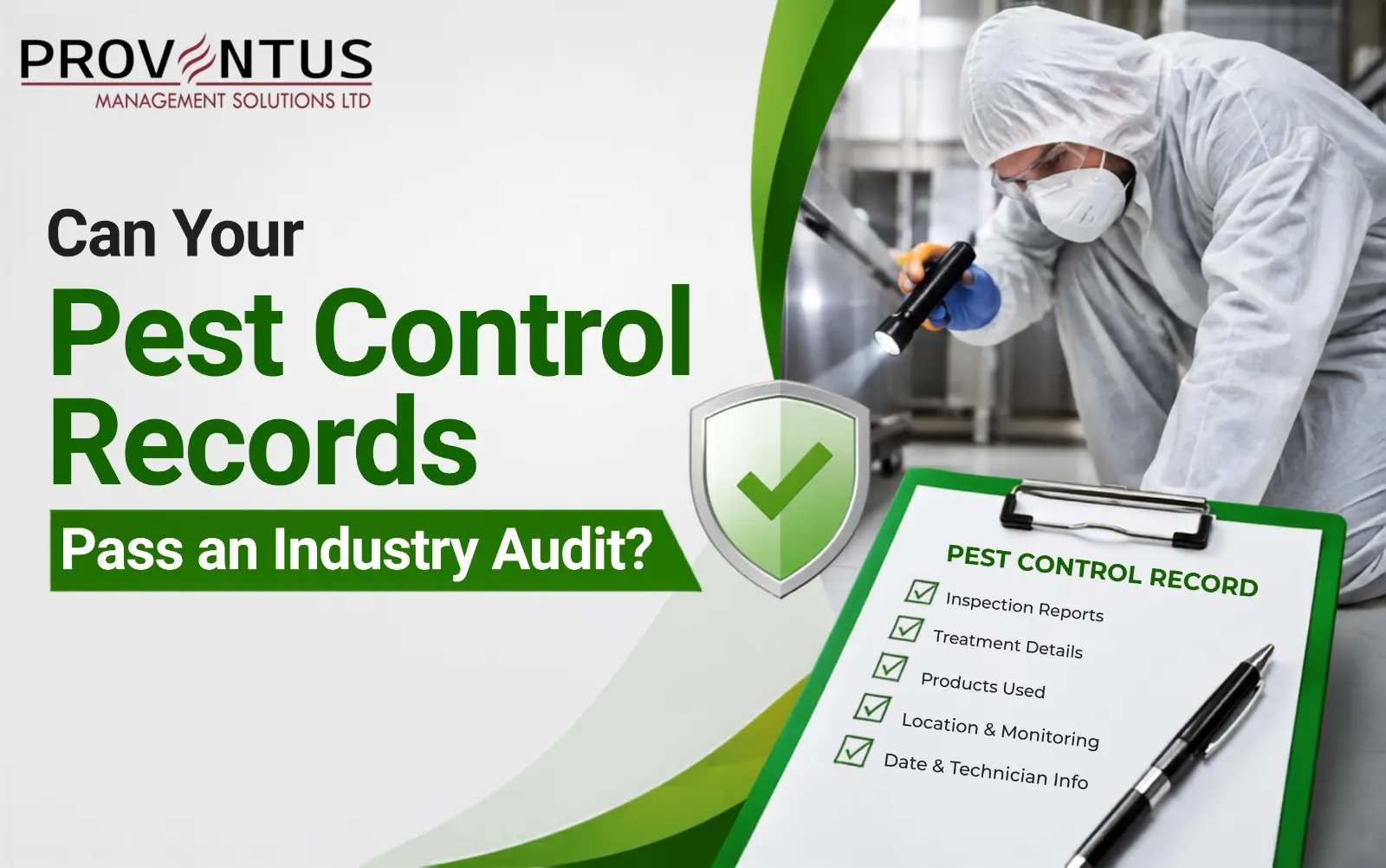
How Does a Pest Control Service Support Compliance?
Pest control compliance is more than routine spraying—it is documented evidence that hygiene, safety, and monitoring controls are working. For food businesses, hospitals, hotels, factories, and defense facilities, organized records support audits, inspections, corrective actions, and contractor verification. Understanding FSSAI, HACCP, NABH, and defense-related documentation helps organizations maintain traceability while choosing a qualified commercial pest management partner across daily operations.
A reliable Pest Control Service in Kolkata should provide more than treatment: it should support inspection readiness with records, approved chemicals, service reports, monitoring logs, corrective actions, and follow-up evidence. The documentation framework varies by industry, risk level, facility type, and audit requirements. This guide explains practical compliance documentation for FSSAI, HACCP, NABH, and defense environments without treating one checklist as universally applicable.
What Pest Control Documents Are Required for FSSAI Compliance?
What pest control documents are required for FSSAI compliance? Food businesses should maintain an organized pest-management file that demonstrates preventive control, monitoring, treatment, and corrective action. Exact documentation can vary according to the facility, food-safety plan, contractual requirements, and applicable regulations.
FSSAI Pest Control Documentation for Food Businesses
Common records may include:
- Pest control service reports and treatment dates
- Pest sighting and activity logs
- Pest monitoring records
- Bait station or trap location maps
- Chemical/product details and application records
- Safety Data Sheets (SDS), where applicable
- Corrective-action reports
- Follow-up inspection records
- Technician details and service authorization
- Integrated Pest Management (IPM) procedures
- Cleaning and sanitation observations linked to pest activity
- Trend-analysis reports for recurring infestations
A strong FSSAI pest-control file should show what was inspected, where pest activity was found, what treatment was performed, which product was used, who performed the service, when follow-up occurred, and what corrective action was taken.
What Records Does HACCP Require for Pest Management?
HACCP emphasizes the identification, assessment, and control of potential food-safety hazards. Pest management should therefore connect with the site’s preventive-control system rather than exist as an isolated vendor activity.
HACCP Pest Control Records Checklist
A practical HACCP-aligned documentation system can include:
| Record | Purpose |
| Pest Management SOP | Defines prevention and response procedures |
| Site Pest Map | Identifies traps, monitoring points, and risk areas |
| Inspection Log | Tracks pest activity and facility conditions |
| Treatment Report | Documents completed pest-control work |
| Chemical Record | Identifies products and application details |
| Corrective Action | Shows how identified risks were addressed |
| Trend Report | Identifies recurring pest patterns |
| Verification Record | Demonstrates review of pest-control effectiveness |
The strongest approach connects pest sightings with root-cause analysis, sanitation, waste management, structural gaps, and preventive actions.
How Does NABH Affect Pest Control Documentation?
Healthcare facilities have different risk considerations because pest activity can affect hygiene, patient areas, food services, storage areas, and infection-control practices. Pest-control records should therefore integrate with the facility’s documented housekeeping, sanitation, safety, and infection-prevention systems where applicable.
Important Hospital Pest Control Records
A hospital or healthcare facility may maintain:
- Pest-control schedule
- Area-wise inspection reports
- Treatment records
- Chemical and product information
- Monitoring-device records
- Pest sighting register
- Corrective-action documentation
- Service-provider credentials
- Technician training or competency evidence
- Follow-up and verification reports
- Relevant housekeeping and sanitation observations
For NABH-oriented environments, documentation should be traceable, reviewable, and consistent with the facility’s approved policies and applicable accreditation requirements.
What Pest Control Documentation Is Needed for Defense Facilities?
Defense establishments can have highly controlled environments, so documentation requirements may be determined by the individual facility, contract, security procedures, environmental controls, and internal SOPs. A generic commercial checklist should not be assumed to replace site-specific requirements.
Defense Pest Control Compliance Records
Depending on the contract and facility, documentation may cover:
- Authorized technician details
- Approved treatment schedule
- Area-wise service reports
- Chemical/product authorization records
- Safety documentation
- Monitoring-point maps
- Pest activity reports
- Corrective-action records
- Follow-up verification
- Incident or escalation reports
- Contractor access and site-compliance records
- Management review documentation
Sensitive facilities may also impose additional requirements concerning access control, confidentiality, work permits, personnel verification, and restricted-area procedures.
What Is Commercial Pest Control Compliance Documentation?
Commercial pest control compliance documentation creates an audit trail between inspection, prevention, treatment, monitoring, verification, and corrective action.
A professional documentation cycle generally follows:
Inspect → Identify → Record → Treat → Monitor → Verify → Correct → Review
This approach is more defensible than maintaining only invoices or monthly treatment certificates.
What Should a Professional Pest Control File Contain?
A centralized compliance file can contain:
- Service agreement or AMC
- Pest-management SOP
- Facility risk assessment
- Technician credentials
- Chemical/product register
- SDS and relevant safety information
- Pest-control service reports
- Pest sighting register
- Monitoring and bait-station map
- Corrective-action reports
- Follow-up reports
- Trend-analysis records
- Customer feedback or incident records
- Training documentation
- Periodic management review
How Can Businesses Improve Pest Control Audit Readiness?
Businesses can strengthen their documentation by following a consistent recordkeeping system.
1. Maintain one accessible compliance file
Keep treatment reports, maps, chemical information, corrective actions, and inspection records organized by date and location.
2. Record actual observations
Avoid generic statements such as “pest control completed.” Record inspected areas, findings, activity levels, treatment actions, and recommendations.
3. Document corrective actions
If gaps such as cracks, stagnant water, uncovered food, poor waste handling, or damaged screens are identified, record the recommended action and follow-up status.
4. Review pest trends
Repeated sightings in one location may indicate a sanitation, structural, drainage, or storage issue requiring root-cause investigation.
5. Verify contractor competence
Businesses should check relevant qualifications, training, product knowledge, safety practices, and documentation capability before appointing a pest-control provider.
6. Keep records audit-ready
Reports should be legible, dated, traceable to specific locations, and reviewed by responsible personnel.
Why Choose the Best Pest Control Service in Kolkata for Compliance?
Choosing the Best Pest Control Service in Kolkata should involve more than comparing treatment prices. Commercial clients should assess whether the provider understands Integrated Pest Management, food-safety environments, monitoring systems, chemical safety, documentation, corrective actions, and audit preparation.
For businesses requiring food-safety documentation, selecting the best pest control company for FSSAI compliance means evaluating the provider’s ability to produce consistent, traceable records rather than simply providing a certificate after treatment.
Before you book FSSAI compliant pest control service, ask whether the provider can maintain inspection reports, pest-monitoring records, treatment details, chemical information, corrective actions, and follow-up documentation appropriate to your facility.
How Does Documentation Support Food-Safety Audits?
Documentation provides evidence that pest prevention is being actively managed rather than handled only when an infestation occurs. It can help management identify recurring problems, demonstrate contractor performance, verify corrective actions, and support internal or external audits.
However, documentation should reflect actual activities and observations. Creating records retrospectively or using inaccurate generic reports can weaken an organization’s compliance position. Check Client’s testimonial click: https://bit.ly/4qavVOQ
FAQ: Pest Control Compliance Documentation
What pest control documents are required for FSSAI compliance?
Typical records include pest-control reports, monitoring logs, pest maps, treatment details, chemical information, corrective actions, and follow-up verification. Requirements can vary by facility and applicable food-safety controls.
Is a pest control certificate enough for FSSAI compliance?
Usually, a certificate alone does not provide the same level of evidence as a complete pest-management record. Businesses should maintain supporting inspection, monitoring, treatment, and corrective-action documentation.
Does HACCP require pest control records?
Pest management should be documented as part of the site’s food-safety and preventive-control system. The records should demonstrate monitoring, prevention, corrective action, and verification.
What pest records should hospitals maintain for NABH-related compliance?
Hospitals should maintain appropriate pest-control schedules, inspection reports, treatment records, monitoring information, corrective actions, and service-provider documentation consistent with their policies and applicable accreditation requirements.
Do defense facilities follow the same pest-control documentation as food businesses?
Not necessarily. Defense facilities may have additional contractual, security, access-control, environmental, or site-specific documentation requirements. Their approved SOPs and contract conditions should take priority.
How often should pest control documentation be reviewed?
Records should be reviewed according to the organization’s risk assessment, pest activity, service schedule, audit requirements, and internal procedures. Recurring pest activity should trigger additional investigation rather than simply repeating treatment.
Conclusion
Effective pest-control compliance depends on evidence, not paperwork alone. FSSAI, HACCP, NABH, and defense environments may have different documentation expectations, so records should reflect actual risks, treatments, monitoring, corrective actions, and verification. A competent provider can help maintain an organized audit trail while supporting Integrated Pest Management, workplace safety, food hygiene, and continuous improvement across commercial facilities. Visit our Map Address click the map link: https://maps.app.goo.gl/HdptTgT5hyVmhc9JA
Recent Posts
Does Your Pest Control Meet HACCP Rules?
What Attracts Pests to Offices and How...
Can You Spot Hidden Termite Damage Before...